English
 Français
 Pусский
 Español
 Português
 ไทย
ไทย العربية
 िन्दी
िन्दी Indonesia
ट्रैक रखरखाव के लिए कस्टम समाधान

Railway Coal Leveling Machine: How to Choose the Right Machine for Wagon Height and Working Efficiency
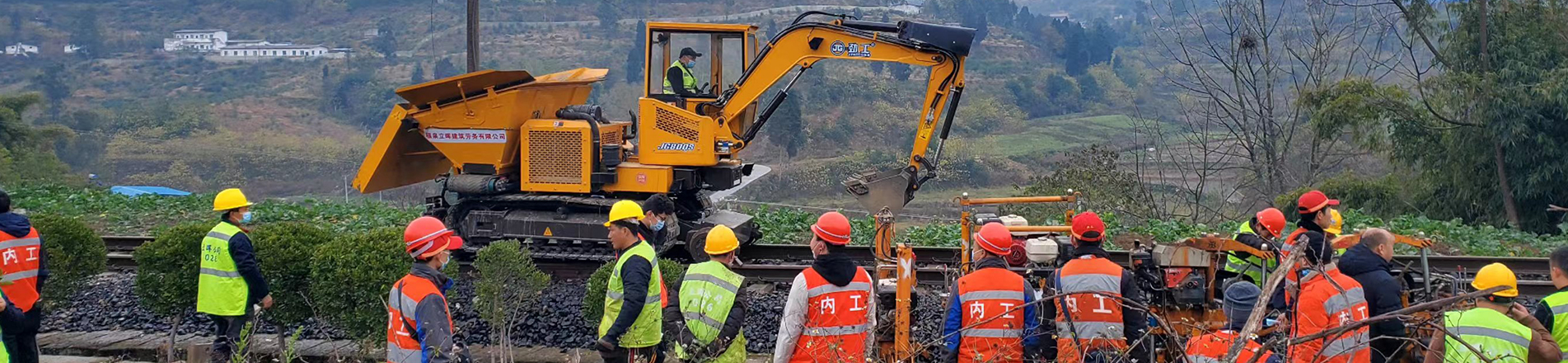
Coal leveling is a relatively small step in railway coal loading, but it directly affects wagon loading safety, load distribution, clearance and loading efficiency. When coal is loaded by conveyor, hopper or rapid loading system, the material does not always form an even surface. A railway coal leveling machine is used to redistribute the coal and keep the load within the required wagon profile.
For operators, the key question is not simply “How much horsepower does the machine have?” The more important questions are:
The basic selection logic can be summarized as:
Wagon Dimensions → Working Height → Cab Lift → Working Reach → Machine Size → Required Productivity
1. What Does a Railway Coal Leveling Machine Do?
A coal leveling machine is normally used after or during the coal loading process to make the coal surface more uniform inside a railway wagon.
Typical operations include:
1.Positioning the machine alongside the wagon.
2.Adjusting the operator's working height and visibility.
3.Extending the leveling arm over the wagon.
4.Redistributing high areas of coal into low areas.
5.Checking the final loading profile.
6.Moving to the next wagon.
Compared with manual leveling, mechanical leveling reduces the amount of work that operators have to perform directly around the loaded wagon and makes the process more repeatable.
The actual productivity, however, depends on the coal condition, wagon dimensions, loading method, operator skill, machine movement and the amount of leveling required.
2. Wagon Height Is One of the First Parameters to Check
A common mistake is to select a coal leveling machine according to machine weight or engine power first.
For railway applications, wagon geometry should normally be checked first.
Different railway systems and freight wagon designs have different:
For example, a coal hopper wagon used in India can have an overall height of around 3.7 m, while other coal wagon designs can be higher or lower. Therefore, a machine designed around one wagon cannot automatically be assumed to work efficiently with another wagon.
Railway loading gauge is also route-specific. The complete route needs to be considered, including clearance restrictions and curves, rather than simply measuring the wagon at one location.
What should be measured before choosing the machine?
At minimum, collect:
| Parameter | Why it matters |
| Rail gauge | Determines machine compatibility |
| Wagon width | Determines lateral working reach |
| Wagon side-wall height | Determines required arm height |
| Maximum coal loading height | Determines leveling position |
| Wagon top profile | Determines working clearance |
| Wagon capacity | Helps estimate workload |
| Wagons per hour/day | Determines required productivity |
| Loading method | Affects how much leveling is required |
This information is more useful than simply telling a manufacturer, “I need a coal leveling machine.”
3. Fixed Cab or Liftable Cab: Which One Should You Choose?
The operator's sightline is one of the most important practical considerations.
With a low wagon, a fixed cab may provide sufficient visibility. But when the wagon side wall is high, the operator may have difficulty seeing the coal surface from a conventional fixed-height cab.
A liftable cab allows the operator to raise the working position and obtain a better view of:
This does not mean that a higher cab is always better.
The cab lifting height should be selected according to the actual wagon height and required operator sightline.
A simple selection principle
Rail level → wagon side wall → coal surface → required operator sightline → required cab lift
For example, if the wagon's working surface is significantly above the operator's normal eye level, a liftable cab can provide a major operational advantage.
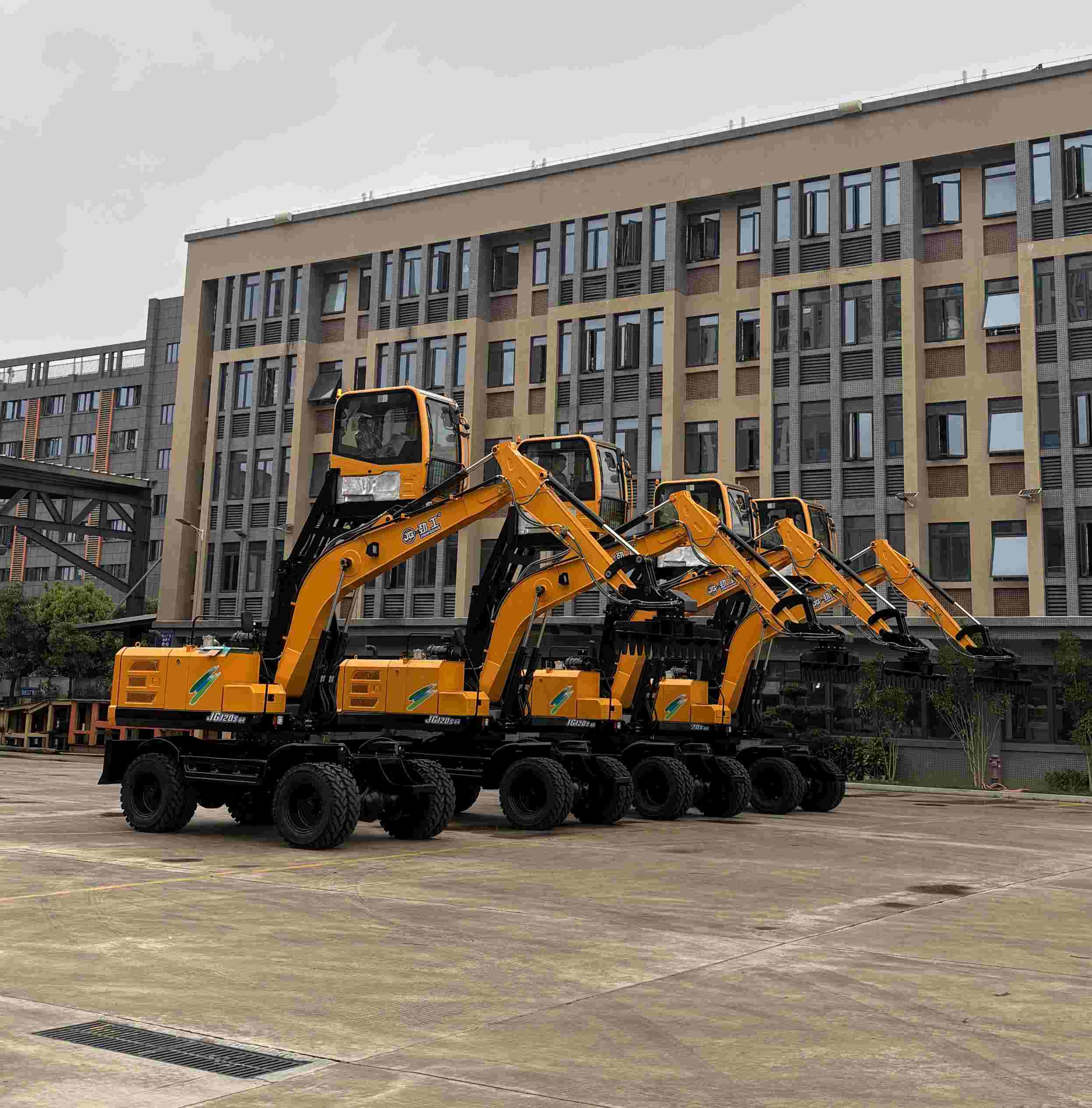
4. How Much Cab Lift Is Enough?
There is no universal cab-lift height suitable for every railway.
Instead, calculate it from the actual application.
A practical approach is:
Required cab lift ≈ required eye-line height − normal cab eye-line height
Then leave sufficient margin for the operator to see both the leveling tool and wagon interior.
A machine specification should therefore ideally provide:
For example, one published customized railway leveler specification lists approximately 1.8 m of maximum cab lifting, 3.8 m maximum leveling height, and an 8.5-ton machine weight. These figures can be used as a reference example, but they should not be treated as universal industry requirements.
The correct question is not:
“Can the cab lift 1.8 m?”
It is:
“Does the cab provide sufficient visibility for our actual wagon?”
5. Machine Size Should Be Selected According to the Workload
Machine size should not be determined by horsepower alone.
A larger machine may provide greater stability, reach or attachment capacity, but if the railway terminal only handles a relatively small number of wagons, excessive machine capacity can increase purchase and operating costs without improving the actual work cycle.
A more practical calculation is:
Required hourly productivity
Required wagons/hour = Total wagons requiring leveling ÷ Effective working hours
For example, if a terminal needs to level 60 wagons during 6 effective working hours:
60 ÷ 6 = 10 wagons/hour
That means the machine and working process need to support an average cycle of approximately:
60 minutes ÷ 10 = 6 minutes per wagon
This six-minute cycle includes more than the actual leveling movement. It may include:
Therefore, a machine advertised with a high theoretical operating speed does not automatically provide the same number of completed wagons per hour.
6. Efficiency Should Be Measured by Wagons Completed
For railway coal leveling, wagons/hour is usually a more useful productivity indicator than travel speed.
A practical productivity report could look like this:
| Indicator | Example |
| Wagons to be leveled | 60 |
| Effective working time | 6 h |
| Required average output | 10 wagons/h |
| Average available cycle | 6 min/wagon |
Actual output should be tested under real operating conditions because coal moisture, particle size, loading height, wagon geometry and machine positioning can all affect the cycle time.
For this reason, manufacturers and railway operators should distinguish between:
Theoretical cycle time
and
Actual field productivity
This distinction is particularly important when comparing different machines.
7. How to Match Machine Size to Different Applications
Rather than choosing a machine simply by “8-ton, 10-ton or 15-ton,” consider the complete operating package.
Small or medium-volume terminal
If the terminal has a relatively small number of wagons and the coal layer only requires routine surface leveling, a compact machine may be sufficient.
The focus should be:
Medium-volume coal loading operation
When wagon turnover becomes higher, stability and cycle time become increasingly important.
The machine should have:
High-volume railway loading
For high-throughput operations, machine capacity should be matched to the complete loading system.
The key issue becomes cycle synchronization.
If the loading system can load wagons continuously but the leveling machine cannot keep up, the leveling operation becomes a bottleneck.
Conversely, buying a machine with substantially higher capacity than the loading system may not improve total terminal throughput.
8. Don't Choose a Coal Leveler by Horsepower Alone
Engine power is important, but it is only one part of the machine.
For railway coal leveling, the following parameters may be more directly related to the actual application:
A machine with more horsepower but insufficient working height or reach may be less suitable than a smaller machine correctly matched to the wagon.
The objective is therefore not to select the largest machine, but to select the smallest machine that can reliably complete the required working cycle.
9. A Practical Selection Checklist
Before requesting a quotation for a railway coal leveling machine, prepare the following information:
Railway information
Wagon information
Production information
Machine information
With these parameters, the manufacturer can calculate the appropriate machine configuration instead of simply recommending a standard model.
10. The Key Selection Formula
For railway coal leveling applications, the selection process can be simplified to five steps:
1. Measure the wagon
↓
2. Determine the required leveling height and reach
↓
3. Calculate the required cab lifting height
↓
4. Calculate wagons/hour and cycle time
↓
5. Select the machine size and hydraulic configuration
This approach is more reliable than choosing a machine only according to engine horsepower or machine tonnage.
FAQ
What wagon height requires a liftable cab?
There is no single universal height. A liftable cab becomes particularly useful when the wagon side wall or coal loading surface blocks the operator's normal line of sight. The required lift should be calculated from the actual wagon dimensions.
How many wagons per hour should a coal leveling machine handle?
It depends on the loading system and required workload. Calculate the required output from the number of wagons and available working time. For example, 60 wagons in 6 effective hours requires an average of 10 wagons/hour.
Is a larger coal leveling machine always more efficient?
No. Overall efficiency depends on the complete working cycle. An oversized machine may provide unnecessary capacity, while an undersized machine may lack reach, stability or working height.
What information should I send a manufacturer before asking for a quotation?
The most useful information is wagon dimensions, track gauge, coal loading height, required cab lift, wagons per hour/day and working environment. Photos or drawings of the wagon are also very helpful.
Conclusion
Choosing a railway coal leveling machine is essentially a matching problem between the machine and the railway loading system.
The most important parameters are not simply engine power or machine weight. The operator should first determine the wagon height, working reach, leveling height and visibility requirements, then calculate the required productivity in wagons/hour.
For applications with high-sided coal wagons, a liftable cab can significantly improve operator visibility. For higher-volume terminals, machine capacity should be matched with the loading system so that leveling does not become a bottleneck.
The practical selection sequence is:
Wagon Height → Cab Lift → Working Reach → Cycle Time → Machine Size → Actual Productivity
That is the basis for selecting a coal leveling machine that is suitable for the railway rather than simply choosing a machine based on its nominal specifications.